

- Home

- Newsroom
- Press releases
- Super User

Super User
In anticipation of the upcoming EU elections in June 2024, EBI has unveiled its manifesto aimed at shaping the policy landscape for boating and nautical tourism in Europe. Titled “Navigating Tomorrow: A vision for a sustainable boating industry #MadeInEurope,” the manifesto outlines a comprehensive strategic approach to drive economic prosperity, sustainability, and innovation in the industry.
Key objectives of the manifesto include advancing environmental sustainability, renewing European competitiveness, facilitating European-based tourism across borders, revitalising Europe's inland and coastal infrastructure, and reducing administrative burdens.
EBI is actively engaging with candidates for the EU parliament before the elections and will continue communication with the EU Commission and elected Members of the European Parliament post-election. The manifesto reflects EBI’s commitment to building a resilient and innovative boating industry and calls on candidates in the EU elections to support its objectives.
For more information and access to the full Manifesto, visit the following link. We urge members and stakeholders to share the Manifesto within their organisations and national candidates for the EU elections.
Europe's national tourism authorities convened in Albania for the 70th meeting of the UN Tourism Commission for Europe, with discussions focused on post-pandemic tourism recovery. The meeting emphasised sustainable tourism development and collaborative strategies to boost economic growth while preserving cultural heritage. As active members of UN Tourism, EBI remains vigilant in monitoring tourism trends and initiatives within the organisation, ensuring alignment with nautical tourism industry objectives and priorities.
Commission Members adopted key frameworks and criteria to support the Agenda for Europe, ensuring a regional focus tailored to address specific needs. Looking ahead, preparations for World Tourism Day 2024 in Georgia and future meetings were discussed, underscoring a commitment to advancing Europe's tourism sector in spite of global challenges.
The new EU Packaging and Packaging Waste regulation aims to tackle constantly growing waste, harmonise internal market rules and boost the circular economy. It was approved by the European Parliament in April. The rules include packaging reduction targets (5% by 2030, 10% by 2035 and 15% by 2040) and require EU countries to reduce, the amount of plastic packaging waste. To reduce unnecessary packaging, a maximum empty space ratio of 50% is set for grouped, transport and e-commerce packaging; manufacturers and importers will also have to ensure that the weight and volume of packaging are minimised.
Under the new rules, all packaging (except for lightweight wood, cork, textile, rubber, ceramic, porcelain and wax) will have to be recyclable by fulfilling strict criteria. Measures also include minimum recycled content targets for plastic packaging and minimum recycling targets by weight of packaging waste.
The Council of the EU needs to formally approve the agreement before it can enter into force.
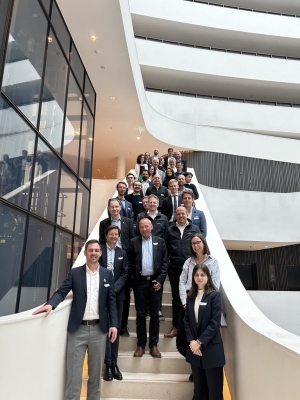
 Tackling climate change and reducing environmental impact as a whole is a major challenge and the boating industry is committed to addressing emissions across the entire life cycle. This is however only possible with a common approach that the entire industry is signed up to.
A group of 16 leading European boat manufacturers and 8 marine industry associations is coming together to develop an industry standard methodology to measuring the environmental footprint of boats under 24 meters. The threshold of 24 meters has been chosen to align with EU regulations. It will be based on a coherent Life Cycle Assessment approach following the stringent EU Product Environmental Footprint Category Rules.
The project will be conducted in two phases, first focusing on developing a science-based and transparent environmental footprint methodology to harmonise calculation rules. In the second phase, the focus will be on implementing this with a comprehensive materials database and user-friendly calculation tool. This then allows manufacturers to conduct eco-design and comprehensively reduce environmental impact, as well as communicate the environmental footprint to consumers, stakeholders and regulators. It will go beyond carbon emissions and include other critical environmental indicators.
This common effort will also allow industry to comply with the latest EU environmental legislation and be ahead of the regulatory curve. The project has already been presented to the EU Commission and received its strong support.
The project is led by European Boating Industry (EBI) and is industry-financed. The renowned environmental sustainability consultancy Quantis has been chosen as technical partner. ICOMIA, the International Council of Marine Industry Associations, is a strategic partner of the project to ensure global alignment. It builds on the comprehensive and independent ‘Pathways to Propulsion Decarbonisation for the Recreational Marine Industry’ study published in November 2023[1].
Robert Marx, President of EBI commented “This is a unique and highly welcome cooperation. For the first time, competing manufacturers are committed to jointly addressing the sustainability challenge. Its outcomes will allow companies of all sizes to access the green transition without greenwashing, reduce environmental impact and proactively shape the regulatory approach in Europe and globally. We need a proactive and pragmatic approach to sustainability and this project will develop the tools that industry needs.”
EBI invites all interested manufacturers, suppliers and stakeholders to partner with the project to reach a common pathway for the industry’s sustainability challenge.
The following manufacturers are involved in the project: Amel Yachts, Amer Yachts, Azimut|Benetti Group, Bavaria Yachts, Beneteau Group, Cantiere del Pardo, Catana Group, Ferretti Group, Fountaine Pajot, Grand Large Yachting, Greenline, Inha Works, Sanlorenzo, Sasga, Sunreef, and Sunseeker.
Groups of small manufacturers have been formed in Italy, France, Finland and The Netherlands to contribute jointly through their associations. Associations involved in the project are BVWW, FIN, HISWARECRON, Finnboat, Confindustria Nautica, Polboat, ANEN, and British Marine.
A liaison board has been set up to represent the interest of suppliers, including composites, internal combustion and electric engine manufacturers in addition to users/consumers. The methodology will be independently reviewed by a third-party panel of experts representing industry, non-governmental organisations and environmental Life Cycle Analysis experts.
[1] Details of the study, including a Synopsis Report can be found at www.propellingourfuture.com which is a global educational campaign aimed at further reducing recreational marine carbon emissions and protecting the marine environment for generations to come.
 Boating and water sports are integral to Europe's economic prosperity, cultural heritage, and societal well-being. With over 32,000 companies and 280,000 employees, the industry stands as a cornerstone of the blue economy and tourism sector, providing access to Europe's seas and inland waters for 48 million regular water sports users.
EBI’s manifesto titled “Navigating Tomorrow: A vision for a sustainable boating industry #MadeInEurope” delineates a strategic framework crucial for the future of the European boating and nautical tourism sector. Among these objectives are the advancement of environmental sustainability and circularity, the renewal of European competitiveness, the facilitation of European-based tourism across borders, the revitalisation of Europe's inland and coastal infrastructure, and the reduction of administrative burdens. To translate these objectives into tangible outcomes, EBI has outlined a series of concrete calls in its manifesto.
EBI will communicate the manifesto with candidates for the EU election taking place from 6-9 June 2024, as well as in the post-election period with the EU Commission and elected Members of the European Parliament. EBI and its members call on candidates for the EU Elections to support the Manifesto's objectives.
Robert Marx, President of EBI, expressed optimism about the industry's future, stating “The next EU legislative cycle will be of vital importance in shaping our industry in the coming years. We look forward to engaging with EU leaders to ensure our sector continues thriving. Our Manifesto reflects our commitment to building a resilient and innovative boating industry. We call on candidates in the EU elections to address these priorities collaboratively, so we can foster an environment that not only sustains our businesses but also contributes positively to European economy and society."
For more information and access to the full Manifesto, visit this link.
TECoNaut, a large-scale EU funded project aims to promote the use of sustainable composite materials in the nautical industry developed with cutting-edge technology, driving the race towards the ecological transition and the employment opportunities offered by sustainable boat building..
The project, funded by the European Union, will be implemented over three years by a consortium[1] made up of industry associations, institutions, academics and SMEs from seven countries: Spain, France, Belgium, Germany, Poland, Greece and Turkey.
To meet this key challenge and provide tools for manufactures across the industry, the TecoNaut project will follow a strategy based on four objectives that correspond to four axes of work:
- Comprehensive identification of skills gaps, aligned with the multilingual European classification of skills, competences, qualifications and occupations
- Development of a course for Vocational Training on sustainable composite materials
- Design of an internship programme for higher education students who will work on the application of Deep Tech skills and sustainable materials in companies.
- To awaken the entrepreneurial mindset of students and future workers in the sustainable boat building
“As an Industry we want to focus on reducing the environmental impact across the life-cycle of the boats” says Philip Easthill, Secretary-General of EBI. “Using more sustainable composites materials is an essential element of our industry. We are excited to be part of the TECoNaut project to create the skills our industry needs. We are delighted that, together with our partners, we were able to attain EU funding for a key industry priority.”
- For the list of partners, see the Teconaut website: https://teconaut.eu/en/
EBI and The SeaCleaners have jointly released "The Guide on Responsible Boating" on World Water Day, March 22nd. This guide, a collaborative effort between the two organisations, serves as a comprehensive call to action for boaters worldwide to combat plastic pollution in oceans and waterways. It provides practical recommendations for boaters to minimize their environmental impact while enjoying their passion for water. The partnership between EBI and The SeaCleaners underscores the shared commitment to promoting responsible boating practices and protecting marine ecosystems. Through this initiative, both organisations aim to empower boaters to take proactive steps in preserving the oceans for future generations.
Read the guide in both English and French here.
 English
 Български
 Hrvatski
 Čeština
 Dansk
Dansk Nederlands
 Eesti
Eesti Suomi
Suomi Français
 Deutsch
 Ελληνικά
 Magyar
 Gaelige
 Italiano
 Latviešu valoda
 Lietuvių kalba
 Maltese
 Norsk bokmål
 Polski
 Português
 Română
 Русский
 Slovenščina
 Español
 Svenska