

- Home

- Newsroom
- Press releases
- Super User

Super User
YACHT-POOL, the pioneer of charter insurance, has always been committed to safe chartering. Over fifteen years ago they developed the Faircharter Contract, that came as close as possible to balancing the legitimate concerns of both the charter company and the charterer-customer.
This set of International Standard Charter Terms and Conditions can be seen as a continuation of the Faircharter Contract, which is already well established in parts of Europe, and has been developed in association with YACHT-POOL and a working group formed by ICOMIA and EBI members who have experience in the charter industry.
They are intended to provide international, uniform general terms and conditions for charter contracts and aim to:
- support both charter providers and agencies associated with them, through legally compliant agreements, in accordance with regulations and endeavouring to adapt the conditions to any changes in the
- uniformly regulate a fair balance of interests between charter parties to create a cross-industry, international, uniform structure that is the same for all
Joe Lynch, ICOMIA CEO said: “These International Standard Charter Terms and Conditions developed in association with EBI and YACHT-POOL show how the recreational marine industry can come together to work on a joint project that will benefit many. We hope that they will be widely used across the industry and we thank the members of the Charter Working Group for the work they put in to get this project to the finish post.”
Philip Easthill, Secretary General of EBI said: “It is important that there is a fair and consistent approach towards consumers and a harmonisation of industry practice that includes all parties; consumers, agents and charter companies.”
To find out more about the new International Standard Charter Terms and Conditions or to submit an application for them visit https://www.icomia.org/standard-charter- terms-conditions/.
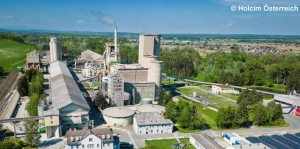
Cement Co-processing of End-of-Life Composites Avoids up to 1 Ton of CO2 Emissions Per Ton Processed

Our nine industry associations have commissioned1 SGS INTRON to prepare a Life Cycle Assessment (LCA) report exploring the environmental impacts of treating End-of-Life (EoL) composites by co-processing in a cement facility.
The independent and peer-reviewed LCA report confirms the positive environmental impact of this end-of-life solution for glass fibre reinforced thermoset composites which are used in various applications, including the automotive, construction, wind and recreational boating sectors.
The report reveals that each ton of EoL composite waste treated in a cement facility saves up to 1 ton of CO2 compared to traditional waste incineration methods.
On the one hand this process of cement co-processing avoids emissions from waste incineration (approximately 500(*) kg of CO2 per ton of EoL composites) and on the other hand it reduces emissions from cement production by approximately 330(*) kg CO2 per ton of EoL composites resulting in an average combined emission saving of 830 kg CO2.
(*): Above savings are weighted average for various compositions of End-of-Life composites. Depending on the End-of-Life composites material composition, the actual saving can vary from 560 up to 1130 kg CO2.
In addition to CO2 savings, cement co-processing of composites offers two other significant benefits that lower the environmental footprint of the cement industry:
- Reduced need for virgin raw materials by recovering the glass fiber fraction of EoL composite.
- Reduced need for fossil energy sources by the efficient recovery of the energy content from the resin fraction.
With the publication of this report, our associations call on the decision-makers to recognize cement co-processing as recycling process for its mineral fraction2. This recognition would be highly beneficial, accelerating the adoption of this existing solution to process EoL composites and fostering the development of a sustainable waste collection system for EoL composites.
Having such a collection system in place will pave the way for other circular technology solutions that currently lack the necessary waste stream visibility to attract the public and private investments needed for expansion.
Our associations continue to collaborate in support of all sustainable recycling solutions for EoL composite materials. Together we call on EU policymakers to help build a supply chain for circular solutions to treat EoL composites3 .
A summary of the report can be found under this link. The full report and LCA software import files will be available to stakeholders on request by contacting EuCIA (This email address is being protected from spambots. You need JavaScript enabled to view it.).
1 CEFIC UP/VE Sector Group, CEMBUREAU, Epoxy Europe, EuCIA, the European Alliance for SMC BMC, European Boating Industry, Glass Fibre Europe, Tech-Fab Europe, and WindEurope.
 The Women in Nautica conference gives you a unique opportunity to witness and engage with the strengths, experiences and visions of women leaders in the boating industry. It is organised by the Croatian companies Navela and Misli More. It will be held on the 17th of October in hotel Zonar, in Zagreb, the capital of Croatia. Croatia has been among the top three boating destinations for the last few years. During an engaging program find out more on sustainability, risk management, sales trends & more in the boating industry, with international panelists sharing their year-long knowledge and experience. Philip-Easthill, Secretary-General of EBI will join the last panel of the day. Learn more in the Women in Nautica Instagram and LinkedIn.
Register here.
Another successful year for the Genoa International Boat Show, which closes its 64th edition with 120,864 visitors registered as of 2.00 pm on 24th September – the event’s closing day – a 2.19% increase compared to 2023 despite yesterday’s unforgiving weather.
1,052 brands and 1,030 boats were on display across a total exhibition area of 220,000 square metres on land and water, with 85% of areas outdoor. The sea trial format is also on the rise with 3,855 tests having taken place during the Boat Show, a 24% leap compared to the previous edition.
Read the full press release here.
The 56th edition of Boot Düsseldorf launched successfully on September 5 with the unveiling of the new campaign, "We Love Water," aimed at connecting with water sports enthusiasts and promoting sustainability. EBI President Robert Marx and Secretary-General Philip Easthill both spoke at the event.
Scheduled for January 18 to 26, 2025, the show will host 1,500 exhibitors across 220,000 square meters, aiming to attract younger audiences with initiatives like the "Sailing Plaza" and "Boating Plaza."
For more information, you can visit boot 2025 website.
During the Genoa International Boat Show, EBI, in collaboration with Confindustria Nautica, hosted the second edition of European Sustainable Boating Roundtable. This high-level panel brought together industry leaders, policymakers, and innovators to discuss the future of sustainable nautical tourism under the theme “Achieving Greener Boating and Nautical Tourism by 2030.”
The event opened with remarks from Piero Formenti, Vice President of Confindustria Nautica and Vice-Chair of EBI, followed by a keynote from MEP Daniel Attard, who emphasised the vital role of the boating industry in supporting island and coastal economies. Attard noted, “Boats are the very lifeline of island economies like ours. The European boating industry is truly a global leader, producing 66,000 new recreational boats annually and directly employing over 280,000 people across the continent.” He stressed that the green transition in the industry must be driven by both innovation and practical, supportive regulations.
Sofía Gutiérrez, Deputy Director of the Sustainable Development of Tourism Department at UN Tourism, provided global insights on sustainable nautical tourism. She highlighted the importance of decarbonising tourism, stating that it is no longer a choice but a necessity. Gutiérrez further pointed out the potential of tourism to drive economic growth while protecting biodiversity, emphasising initiatives such as the Glasgow Declaration and the Nature Positive Tourism Partnership.
The roundtable also included valuable insights from industry leaders. Olivier Bougan from the Fédération des Industries Nautiques stressed the importance of support for circularity projects like the Blue Boat Horizon (LCA Project), supporting the industry's shift toward sustainability. Hans Roelants from Brunswick discussed the need for realistic sustainability goals, highlighting the alignment of industry and policy to achieve meaningful change. Areti Priovolou from D-Marin explained that marinas are ready for the green shift but are awaiting the wider adoption of new technologies to fully adapt to the changing landscape.
The event concluded with a presentation by Robert Marx, President of EBI, outlining EBI’s 2024-2029 priorities for a more sustainable boating industry in Europe. Marx highlighted the need for ongoing collaboration between industry and policy-makers to advance sustainability, innovation, and economic growth in the nautical sector.
Together with our members, the German Marine Federation (BVWW) and the Swiss Boatbuilding Association, EBI co-organised a panel discussion at the Interboot in September. The aim was to raise awareness in the industry on the Lake Constance authorities’ target of decarbonisation by 2040 and discuss the process and views of industry in an open format.
Participating on the panel were Philipp Franke (Head of Unit, Ministry of Transport Baden-Württemberg), Dr. Steffen Häbich (Head of Department Special Interest, ADAC e.V.), Nico Winkler (Manage reFuels, Präg Energie) and Ulrich Schäfer (Country Manager Germany, Benelux & Switzerland for Mercury Marine).
Representing EBI on the panel was Karsten Stahlhut as Chair of the Executive Committee. He resumed that “the panel discussion generated a great deal of interest. The IBK's openness to technology is particularly positive. Unlike other regions, it does not want to electrify everything, but rather approaches the issue in a serious and solution-oriented manner. We are all pursuing the same goal and I am sure that with this approach we can and will achieve very rapid and efficient progress and intermediate goals in order to incorporate the technological advances of the next 15 years into the solution-finding process. From my perspective, the path that has been taken is sustainable and, above all, feasible.”
Together with its members in the bordering countries of Lake Constance, EBI will continue to engage with the authorities driving the process to ensure a realistic but ambitious approach that industry can support.
The European Commission’s Transition Pathways initiative focuses on driving industries towards a green and digital future. These pathway reports outline concrete steps to help key sectors like tourism and mobility achieve sustainability and resilience. The EU Commission wants to work on their implementation together with the private sector and has called the private sector to pledge implementation actions. By submitting pledges, companies can showcase their commitment to these goals, contributing to their sector’s transition.
The Tourism Transition Pathway was the first of its kind, developed with key input from industry groups, including EBI. It focuses on boosting tourism resilience, sustainability, and digital innovation. For the nautical tourism sector, this pathway emphasises not only sustainable tourism but also the industry's key role in local economies and quality tourism.
The Mobility Transition Pathway—which highlights the nautical industry’s importance in areas like alternative fuels and the recycling of end-of-life boats—also welcomes pledges. This pathway includes the broader mobility ecosystem and outlines the actions needed to accelerate decarbonisation, boost circularity, and ensure digital innovation.
We encourage all our members to contribute their own pledges. By participating, you’ll join a movement shaping the future of tourism and mobility, with a direct link to the EU’s vision for sustainability and resilience. Find more information here.
 English
 Български
 Hrvatski
 Čeština
 Dansk
Dansk Nederlands
 Eesti
Eesti Suomi
Suomi Français
 Deutsch
 Ελληνικά
 Magyar
 Gaelige
 Italiano
 Latviešu valoda
 Lietuvių kalba
 Maltese
 Norsk bokmål
 Polski
 Português
 Română
 Русский
 Slovenščina
 Español
 Svenska