

- Home

- Newsroom
- Press releases
- Super User

Super User
The European Composites Industry Association (EuCIA) has launched the European Circular Composites Alliance (ECCA), a new initiative aimed at advancing the circularity of composite materials across European industries. EBI is among the signatories supporting the alliance and will be representing the views of the recreational boating industry in the Alliance.
ECCA brings together stakeholders from the composites value chain to coordinate efforts on increasing the reuse, repurposing, and recycling of composites. The alliance will work to define realistic and measurable targets for circularity, promote standardisation for circular product design, and support knowledge exchange among industry, research and policymakers.
By creating a common platform, ECCA seeks to address the challenges currently limiting the circular use of composites, including technical barriers, market uptake, and the lack of harmonised definitions or guidelines. The initiative is intended to complement existing EU objectives on the circular economy and contribute to building more sustainable industrial value chains.
If you would like to follow the development of the ECCA, please contact EuCIA: This email address is being protected from spambots. You need JavaScript enabled to view it.
EuCIA, a close partner of EBI has released the latest version of its European Composites Circularity Solutions listing, designed to improve access to organisations that provide recycling and reuse solutions for composite materials and components.
The June 2025 edition features contact information for service providers and details the types of composite waste they process.
The listing is updated on a regular basis, with a new edition published every six months. If an organisation wishes to be featured in the European Composites Circularity Solutions listing please email EuCIA: This email address is being protected from spambots. You need JavaScript enabled to view it.
EU ministers responsible for tourism gathered in Warsaw on 24 June for an informal meeting hosted under the Polish presidency of the Council of the EU. Discussions focused on making Europe a safe, competitive and sustainable destination amid shifting global conditions and continued sectoral vulnerabilities.
The meeting provided an opportunity to take stock of the challenges facing the tourism ecosystem, including the long-term impact of the COVID-19 pandemic, geopolitical instability, and the need for environmental and social resilience. Central themes included strengthening common quality standards, supporting lesser-known destinations, and aligning tourism data for more effective destination management.
The ministers also discussed the development of a new EU Sustainable Tourism Strategy, due in 2026. This future strategy aims to update the European Tourism Agenda 2030 and Transition Pathway for Tourism, ensuring alignment with broader EU goals on competitiveness, green transition, and support for small enterprises. The EU Commission is currently collecting input in preparation, through the targeted consultation shared recently with members.
Several member states shared national and regional approaches to tourism management and safety, and reaffirmed the need for coordinated action across the EU. The meeting was also attended by Ukraine, whose participation highlighted efforts to promote resilience and cross-border cooperation.
On 5 June, the EU Commission published the European Ocean Pact, a new strategic framework aiming to consolidate all ocean-related EU policies. The Pact sets six overarching priorities: ocean health, sustainable competitiveness of the blue economy, support for coastal regions, ocean research and skills, maritime security, and ocean diplomacy. It will be implemented through a combination of legislative and financial instruments.
Crucially, recreational boating and coastal tourism are formally recognised as part of the blue economy, thanks to EBI’s continued engagement. The Pact highlights the role of ‘recreational activities’ in maritime spatial planning and tourism policy, marking a notable step towards sector integration into EU-level decisions.
The Pact announces several upcoming initiatives, including a binding Ocean Act (2027), a public Ocean Pact Dashboard, and a High-Level Ocean Board. These initiatives will directly influence maritime spatial planning, funding priorities, and future regulation.
Members can contact the EBI Secretariat to receive the full policy briefing with analysis of upcoming legislative initiatives and potential implications.

European Boating Industry (EBI) and the Foundation for Environmental Education (FEE), the organisation behind the Blue Flag certification, joined forces with a Memorandum of Understanding aimed at accelerating sustainable practices within the European nautical tourism sector. This collaboration reflects both organisations' strong commitment to promoting innovation, environmental stewardship, and responsible growth across the industry.
Bringing together complementary expertise, the partnership combines EBI’s influence in European recreational boating policy with FEE’s global leadership in sustainable tourism. With initiatives such as Blue Flag and Green Key, FEE sets internationally recognised standards, while EBI engages directly with policymakers and industry actors to advance sustainable development and connects the boating sector at European level from manufacturing to tourism and services. This collaboration creates a strong foundation for unified efforts, shared advocacy, and greater impact to support the nautical tourism sector.
Through this partnership, EBI and FEE commit to a close and ongoing collaboration aimed at advancing sustainability. This includes mutual promotion of activities, the joint development of projects aligned with shared priorities and regular exchanges of information. The partnership is grounded on a shared commitment to delivering meaningful and accountable outcomes.
Philip Easthill, Secretary-General of European Boating Industry, emphasised the significance of the partnership by stating, “This is an important step forward for the recreational boating industry in Europe. By aligning with FEE, we are reinforcing our commitment to a sustainable future for nautical tourism, one that balances growth with environmental responsibility.”
Daniel Schaffer, CEO of the Foundation for Environmental Education, welcomed the collaboration, noting, "The Foundation for Environmental Education is proud to formalise its collaboration with the European Boating Industry Association through this Memorandum of Understanding. As custodians of the Blue Flag, one of the world's most recognised voluntary eco-labels, we see this partnership as a vital step forward in promoting sustainable practices across the pleasure boating sector in Europe. By aligning with EBI, we aim to further our shared commitment to protecting marine and coastal environments while supporting innovation and responsibility in the recreational boating community. Together, we can chart a more sustainable course for the future of European waters."
At the intersection of Europe’s leisure marine and recreational fishing sectors, EBI and EFTTA combine distinct yet complementary strengths. EBI spans the entire boating value chain, shaping policy and advancing sustainability in nautical tourism. EFTTA speaks for Europe’s tackle manufacturers, wholesalers, and fishing tourism enterprises, advocating for environmentally responsible recreational fishing. By joining forces, the partnership enhances the visibility and influence of both sectors within the European Union’s policy landscape.
The agreement outlines a coordinated approach to advocacy, data sharing, and communication, with a strong focus on shaping policy and public dialogue around the blue economy, marine access, environmental sustainability, and tourism. Joint participation in flagship events such as the EFTTA Angling Summit and EBI’s Blue Innovation Dock will serve as key platforms for visibility and collaboration. In parallel, both organisations will engage in shared public affairs efforts and contribute to policy discussions on qualifications and recreational access. Regular meetings between leadership teams and the development of joint action plans will support implementation, reflecting a pragmatic, forward-looking partnership that balances strategic alignment with institutional independence.
Robert Marx, President of the European Boating Industry, commented: "Bringing together boating and recreational fishing strengthens our ability to shape a sustainable and innovative future for Europe’s marine leisure sector. This partnership with EFTTA opens new doors for collaboration and ensures our industries have a stronger voice where it matters most."
Gerard Bakkenes, President of EFTTA, added:
This partnership marks an important step forward for Europe’s recreational fishing and boating sectors. Together, EFTTA and EBI represent two large sectors that support hundreds of thousands of jobs. Sustainability is at the core of what we do – from the products we develop to the way we engage with our environment. By joining forces, we can better contribute to the EU’s vision for sustainable Blue Growth and ensure our sectors remain strong, innovative, and aligned with Europe’s environmental goals.
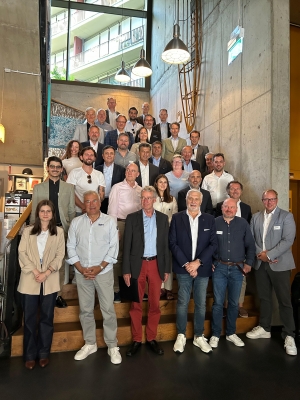
European Boating Industry expands membership and elects new leadership
 Held in the maritime city of Hamburg, the General Assembly was a key occasion to strengthen cooperation across the sector and welcome new members into the EBI network. This year, EBI proudly expands its community with the addition of two new full members: ACAP APICAN, representing Portugal, and Fédération Française Ports de Plaisance, representing French marinas. EBI now represents 32 members across 21 European countries.
Fernando Sá, President of ACAP APICA, stated: “The Nautical Division of ACAP represents companies in the recreational nautical industry, trade and services in Portugal. Being member of the EBI is an important step to achieve our objectives as solving the problems of recreational boating and helping this sector growing.”
Guillaume Nardin, General Delegate of Fédération Française Ports de Plaisance added: “The French Federation of Marinas (FFPP) is delighted to join the European Boating Industry as a new member. This partnership reflects our shared commitment to shaping a sustainable future for the yachting and marina sector across Europe. Together, we aim to foster dialogue, innovation, and collective action to support sustainable transformation in nautical tourism industry.”
These new members further reinforce EBI’s role as the unified voice of the recreational boating industry in Europe. Their joining reflects a growing momentum across Europe to advance cooperation, sustainability, innovation, and resilience in boating and nautical tourism.
EBI is also pleased to announce that Slovenian Marine Industry Association (SMIA) is rejoining the association as a member. This return marks a significant step forward for the Slovenian boating sector and comes under the new leadership of Matjaž Murko, a seasoned industry professional and passionate advocate for the region’s marine development. He also serves as President and CEO of MennYacht Group.
Matjaž Murko, President of SMIA shares: “We are truly delighted to see SMIA rejoin the EBI community and look forward to building a strong and forward-thinking partnership. After a few years of pause, this marks a new chapter – one of active contribution, collaboration, and shared ambition for the future of the European boating industry.”
Elections to the Council were held during the General Assembly
For the coming two years, the association will be led by Robert Marx as President (VMWD/Germany), Vice-President & Treasurer Anne-Marie Bouweraerts (Nautibel/Belgium), Vice-President Jean-Paul Chapeleau (FIN/France). Elected as Council members are Jordi Carrasco Abad (ANEN/Spain), Mirek Hajdukiewicz (POLBOAT/Poland), Jeroen van den Heuvel (HISWA-RECRON/ The Netherlands), Ana Calic (CEA/ Croatia), and Jarkko Pajusalo (FINNBOAT/Finland), and Fabio Planamente (Confindustria Nautica/Italy) appointed as special representative for the large yacht sector.
Leaving the Council, with the gratitude of EBI and the European industry is Vice-Chair Piero Formenti (Confindustria Nautica/Italy).
Robert Marx, President of EBI commented:
“Hamburg’s rich maritime heritage offered the perfect setting for this year’s Assembly. We are delighted to welcome ACAP-APICAN and Fédération Française Ports de Plaisance into our growing family. Their contributions and expertise will strengthen our collective advocacy and provide valuable perspectives on marina development and the boating value chain. As I begin my new two-year mandate as President, I look forward to working with the newly elected Council to drive forward EBI’s core priorities—supporting sustainability, growth and industrial competitiveness in our sector. With key EU policy developments ahead, we are committed to ensuring that recreational boating is recognised as strategic and EU policy strengthens not restrains our businesses. Our cooperation on Life Cycle Assessment in the Blue Boat Horizon project and events will drive forward our mission. With new opportunities and challenges ahead, EBI is more committed than ever to being a strong, united voice for our sector at the European level."
Throughout the discussions in Hamburg, members reflected on the evolving global trade landscape and its implications for the recreational boating industry. Topics included the current economic outlook, consumer expectations in a changing market. Particular attention was given to how the industry can diversify trade relationships, strengthen Europe’s internal market, and respond to shifting demands. These conversations also highlighted the importance of collaboration between national associations and EBI to support businesses and ensure the sector remains competitive, resilient, and well-positioned for the future.
 English
 Български
 Hrvatski
 Čeština
 Dansk
Dansk Nederlands
 Eesti
Eesti Suomi
Suomi Français
 Deutsch
 Ελληνικά
 Magyar
 Gaelige
 Italiano
 Latviešu valoda
 Lietuvių kalba
 Maltese
 Norsk bokmål
 Polski
 Português
 Română
 Русский
 Slovenščina
 Español
 Svenska