

- Home

- Newsroom
- Press releases
- Super User

Super User
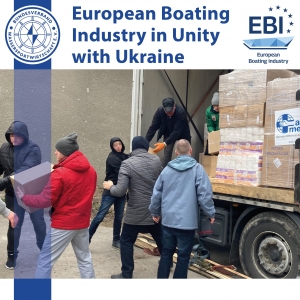
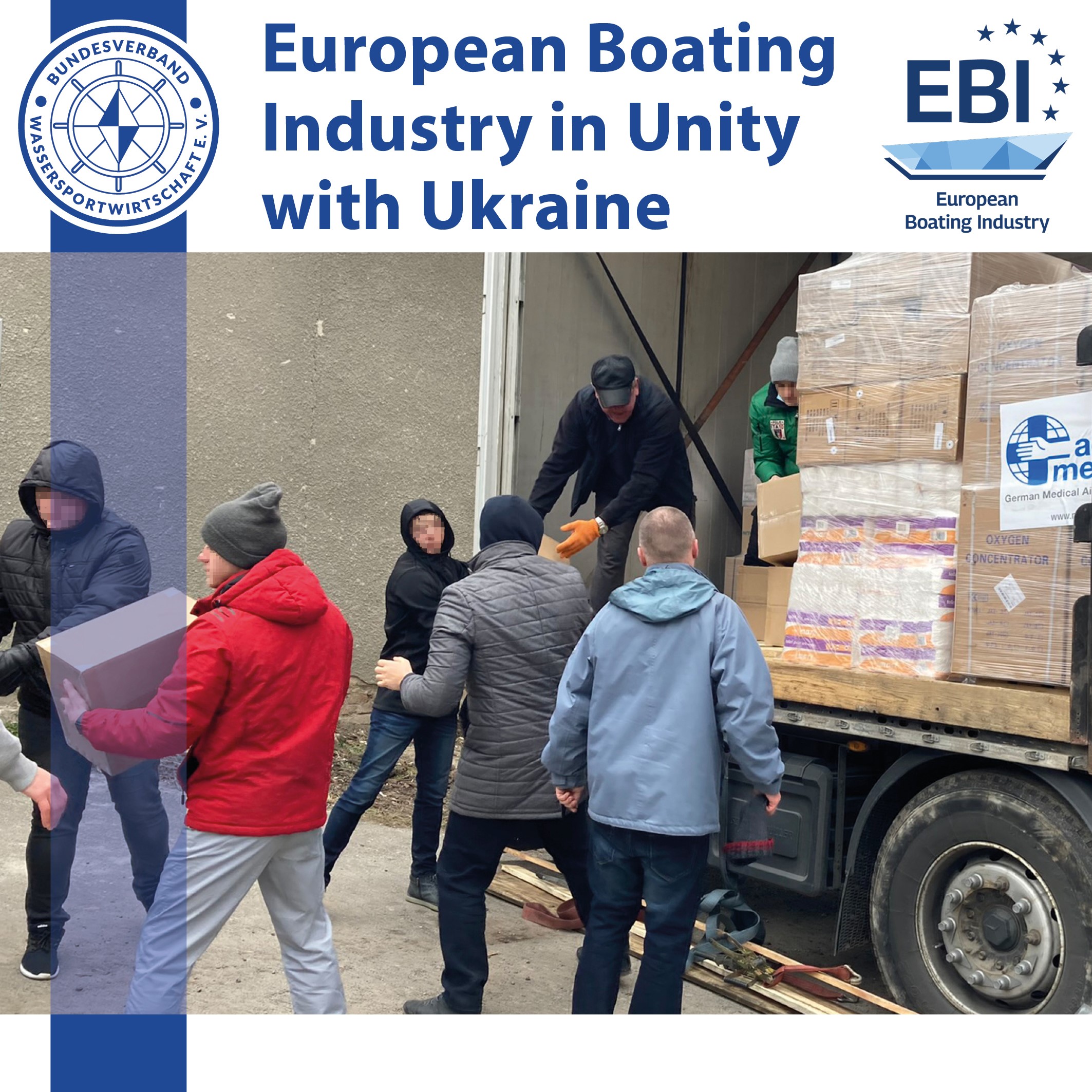 The current situation in Ukraine casts a shadow on Europe. Many in our industry have been closely working with Ukrainian colleagues for years. As the European boating and water sports industry, we feel a need to stand at the side of our Ukrainian colleagues and friends in these difficult times.
EBI is therefore launching a fundraising campaign under the theme of "European Boating Industry for Ukraine". For this, we are working together with the German charity Action Medeor e.V., which specialises in the delivery of emergency medical supplies to war and crisis areas. In view of the current developments, in which more and more civilians are involved, there is a great need for this support. Action Medeor delivers - as long as it is possible, and the borders can be passed - directly to Ukraine and has already built up its own infrastructure and logistics on the ground.
The campaign welcomes donations from companies and private individuals. Action Medeor is certified and issues corresponding donation receipts (under German law only). The fundraising campaign can be found here.
Thanks you very much for your support!
The entire recreational boating industry, represented by European Boating Industry (EBI) and the International Council of Marine Industry Associations (ICOMIA) strongly condemn the invasion of Ukraine. Our thoughts are with the Ukrainian citizens, and the employees from boat yards, marinas and suppliers based in Ukraine who are suffering as victims of the war.
The industry is united in its support for the EU and international sanctions, which are a necessary response to the Russian regime’s aggression. EBI and ICOMIA urge all companies across the world to comply to the highest degree. Appropriate and detailed guidance from governments is crucial to support companies together with financial measures where necessary.
TransEurope Marinas, sustaining member of EBI, with over 80 marina members stretching across a network of 12 different countries, celebrates 35 years of cooperative association in 2022. The group was born in 1987 from a group of a dozen marina managers, who launched the entity then known as “TransManche” as a means to support independent family marinas, and to encourage their berth-holders to cruise further afield by offering reciprocal berthing conditions.
TransEurope Marinas has kept the same spirit nowadays although the group has expanded in size and ambition. TransEurope Marinas managers meet regularly to openly share good practice ideas and further the aims of the group and those of the global boating community.
A recent partnership with marine tech trailblazers Pick a Pier, has established the basis to work on digital transformation of marinas, fostering digital literacy and awareness in the boating sphere and facilitating communication between marinas and boaters. Innovative approaches such as smart, real-time berth allocation powered by machine learning, have enabled TransEurope members to take a huge leap forward in this regard.
The president of TransEurope Marinas Jean-Michel Gaigné CMM commented that TransEurope Marinas remains at the vanguard of the marinas sector, not only for its capability to recognise evolving customer expectations, but above all for the marina operators’ personal connections with the boating community. TransEurope Marinas represents an inspiration for all those who seek out rewarding boating experiences from the Baltic to the Aegean.
More on TransEurope Marinas can be found on their website.
The Marine Innovation Association (MIA), sustaining member of EBI, is inviting all members to encourage their marinas to take part in a survey, conducted under its work in the Marinas Group of ICOMIA (IMG), and get an opportunity to win free tickets for the World Marina Conference 2023 in Portugal.
ICOMIA has created a Smart Marinas Working Group to evaluate how the future marinas should evolve to meet customer needs and be prepared for the new trends ahead. The use of digital tools, which include software operated activity, wireless-enabled actions, and any other technology that is based on digital communication and data sharing, is increasing, which requires marinas to adjust.
The IMG of ICOMIA is seeking marinas' input to evaluate their current utilization level of digital tools and hear their thoughts on how they envision the future ahead of us. Please participate in this Working Group survey and encourage marina members to do so as well as input is important to formulate valid industry guidance. From all completed survey responses ICOMIA will draw 5 lucky winners, who will each receive one free ticket for the next ICOMIA World Marinas Conference 2023 in Vilamoura/Portugal, courtesy of the host and IMG member APPR. Also, MIAs and member marina associations are encouraged to circulate this survey with their membership - the association from which most responses have been received will receive a free booth at WMC 2023.
The deadline for survey submissions is 31 March. The link to the survey can be found here.
On 10th February 2022, the European Commission published the interim economic forecast covering annual and quarterly GDP and inflation for the current and following year for all Member States, as well as EU and euro area aggregates.
According to the forecast, the EU economy entered the new year weaker than previously projected. Having regained pre-pandemic output level in summer last year, a moderate slowdown was already expected in the Autumn Forecast. Economic expansion is set to regain pace in the second quarter of this year and remain robust over the forecast horizon. Following a strong recovery by 5.3% in 2021, the EU economy is now forecast to grow by 4.0% in 2022, as in the euro area, and by 2.8% in 2023 (2.7% in the euro area).
Compared to the Autumn Forecast, inflation projections have been revised up, as energy prices are now set to remain high for longer and price pressures are broadening to several categories of goods and services. Inflation in the euro area is projected to peak in the first quarter of 2022 and remain above 3% until the third quarter of the year. As the pressures from supply constraints and energy prices reduce, inflation is expected to decline considerably in the final quarter of the year and stabilise at below 2% next year. Overall, inflation in the euro area is forecast to increase from 2.6% in 2021 (2.9% in the EU) to 3.5% (3.9% EU) in 2022, before declining to 1.7% (1.9% EU) in 2023.
On 8th February 2022 the European Commission launched the European Chips Act. It aims to support Europe’s competitiveness and resilience in semiconductor technologies and applications and help achieve both the digital and green transition. It aims to do this by strengthening Europe’s technological leadership in the field. The recent chips shortage highlighted the extreme global dependency of the semiconductor value chain on a very limited number of actors in a complex geopolitical context.
With the European Chips Act, the EU aims to give a response to the semiconductor shortages and reinforce Europe’s technological leadership. It will employ more than € 43 billion of public and private investments and set measures to cope with any future supply chain disruptions. The main objectives of the EU Chips Act include building and strengthening capacity to innovate in the design, manufacturing and packaging of advanced chips and building a framework to increase production capacity to 20% of the global market by 2030
The European Parliament and Member States will discuss the Commission's proposal according to the ordinary legislative procedure. If adopted, the Regulation will be directly applicable across the EU.
On 25th January, EBI, within the context of its General Assembly, launched a new strategy for the period 2022 – 2025, together with a new branding and logo. It was unanimously approved by all members. The new strategy is represented by the mission statement of “Advancing and representing a sustainable boating and nautical tourism industry #MadeInEurope”. It is built on a strong set of core actions and initiative that EBI will lead.
With clear objectives, EBI will focus its actions on the core area of active interest representation at European level while introducing several complementary initiatives that will offer added value to EBI’s members and the industry. The new strategy is accompanied by a new logo and branding, the first update since EBI’s foundation in 2009, that showcases its status as an effective, modern, and member-driven association. This rebranding effort marks EBI commitment to further improving its value in support of the industry.
Furthermore, EBI welcomed two new members: the Irish Boat Rental Association, as a full member, and the Electric Boat Association of Greece, as a sustaining member. The enlargement of its membership marks, once again, the increased role of EBI as a powerful voice towards the EU Institutions and stakeholders.
The Recreational Craft Sectorial Group, representing notified bodies for the RCD, has released the 2022 guidelines for the RCD. The RSG Guidelines are prepared to assist with the conformity assessment procedures undertaken by notified bodies for recreational craft, personal watercraft, their components and their engines. The RSG Guidelines can be downloaded here.
The European Commission released the update of the RCD Application Guide, including a number of changes that EBI has successfully advocated in the interest of the boating industry, in particular the new definition of ‘model year’. The changes were approved by the Member States in the RCD Expert Group in 2021. Changes in the guidance were made in the following areas:
- Hydrofoils
- Model year
- Durability criteria
- Maximum recommended load
- Canoes and kayaks
- Provisions of Art. 38.4 (finding of non-compliancy by notified body in course of monitoring conformity following issue of certificate)
- Provisions of the non-road mobile machinery legislation applicable to the RCD
- Update of relevant harmonised standards
- Inclusion of table of contents
EBI is available for any questions or further information about the updated Application Guide.
On 24th January the Blue Invest workshop on green nautical technologies, jointly organised by EBI, the European Commission and PwC was held online. The workshop should have been held at the Blue Innovation Dock during boot Düsseldorf 2022, which was cancelled due to the ongoing pandemic situation. This did not prevent the workshop to successfully bring together entrepreneurs, corporates, private investors, and stakeholders to discuss developments in green nautical technologies and provide insights into investment opportunities.
The virtual event was moderated by Catherine Frideres, Senior Project Manager of Blue Invest. Giving a keynote on sector and its potential was Philip Easthill, Secretary General of European Boating Industry. He highlighted the significance of the recreational boating industry as a large ecosystem of manufacturers, service providers and infrastructure operators, encompassing many companies active in a variety of subsectors.
At the EU level, several policy drivers are moving the industry towards sustainability, such as the Sustainable Blue Economy Strategy and the review of the Recreational Craft Directive. At the industry level, there is an awareness of the need to maintain a clean and healthy marine environment, as well as the recognition of the need to address the challenges coming from climate change. This is backed by consumers that are demanding products with high level of digitalisation and sustainability. Recent trends in the industry include an acceleration of the shift towards boating and water sports in the leisure and tourism space with marked interest coming from new demographics, entry-level options and a demand for shared ownership and chartering. However, the industry is currently facing challenges with supply chain bottlenecks and high-priced raw materials.
He also mentioned the many challenges that boating industry is facing in its transition to sustainability, in particular the lack of a one-size-fits-all solution for zero-emission propulsion. Different solutions are required according to the boat size, range, and usage. The large boat park with long lifetime needs to also be addressed to decarbonise the entire sector. Looking at the 2030 targets, the industry can move forward with the electrification of small boats with shorter range requirement, hybrid engine solutions and biodiesel to be used in existing engines, the replacement of old-technology engines, and the improvement of fuel consumption and hydrodynamic resistance of the hull and use of hydrofoils. As long-term solutions to achieve the 2050 goals a number of other technologies will be crucial, such as the use of synthetic and bio-based fuels, hydrogen, the continued improvement of fuel consumption improvements and hydrodynamic resistance and innovation in terms of new technologies and fuels. He presented some case studies of European boating companies and marinas developing innovative sustainable solutions “Made in Europe”.
He concluded his presentation by referring to the significant opportunities for innovation and investment in the boating sector over the coming years driven by growth forecasts. Green and digital solutions are encouragingly increasing but innovation and investment are crucial for all areas of the green transition and to avoid bottlenecks. From a policy perspective this requires strong support and investment, private and public, to ensure competitiveness and success of the European-based recreational boating industry.
In the panel discussion on green nautical technologies, Anne-Marie Bouweraerts (Vice President, EBI) discussed green investment opportunities together with Laurent Probst, (Partner and Economic Development & Innovation Leader, PwC), Frank Schweikert (Founder and Director, German Ocean Foundation), Gabriella Richardson (Founder, Yachting Ventures), and Claus Schultze (Policy Officer, DG MARE). Ms Bouweraerts focused on the significant opportunities for innovation and investment in the recreational boating industry over the coming years. To continue in this positive direction, it is important that the strength of “Made in Europe” is sustained through the support of governments at all levels, especially given the high reliance of the sector on SMEs. She pointed out the role of EBI, and its new stratagy, as a major player in these discussions and in promoting the recreational boating sector.
Laurent Probst pointed out that while the high level of innovation in the boating sector is undeniable and is set to continue in the long term, it is important that decision-makers, both at the corporate and institutional level, are aware of the bottlenecks the sector might face in the future. Firstly, the market size of the boating sector will have to enlarge to bring an increasing number of companies to invest in sustainability. The second bottleneck regards the effort that companies will have to put in developing circular economy solutions to ensure that a sustainable approach is extended to the entire value chain. The third bottleneck concerns the fact that the majority of companies in the industry are SMEs that tend to encounter more difficulties in investing adequately into digitalisation and sustainability. Gabriella Richardson highlighted the importance of private investment and the role that Yachting Ventures plays in providing coaching and mentoring opportunities for start-ups in the yachting and boating industry. While the organisation does not solely focus on green solutions, this segment has substantially increased.
Frank Schweikert discussed the role of water sports in enhancing the protection of the seas where there is significant potential. The German Ocean Foundation sees itself at the intersection of science, society, and industry. Many initiatives are ongoing, such as the ‘love your ocean’ initiative with boot Düsseldorf, the United Nations Decade of Ocean Science, and the Ocean Festival in Berlin. He also presented the vision of the German Ocean Foundation for the development of a sustainable water sports sector: speed reduction and maximisation of the experience, digitisation, expansion of the shared economy, broad and immediate use of regenerative energies, use of sustainable materials in old products and new products, celebration of sustainability successes with the water sports community.
The session was followed by a pitch session featuring five European SMEs and start-ups in the industry that showcased their innovative solutions to an audience of potential investors. Two of the start-ups pitching received concrete approaches for potential investment by the private investors participating.
More information about the workshop can be found here and about the EU’s BlueInvest programme here.
 English
 Български
 Hrvatski
 Čeština
 Dansk
Dansk Nederlands
 Eesti
Eesti Suomi
Suomi Français
 Deutsch
 Ελληνικά
 Magyar
 Gaelige
 Italiano
 Latviešu valoda
 Lietuvių kalba
 Maltese
 Norsk bokmål
 Polski
 Português
 Română
 Русский
 Slovenščina
 Español
 Svenska