

- Home

- Newsroom
- Press releases
- Super User

Super User
26 October, 10:00 – 12:00 CEST Executive Committee
Online
16 November, 15:30 – 17:00 CEST Council meeting
METSTRADE, Amsterdam
21 – 29 January boot Düsseldorf
21 – 29 January Blue Innovation Dock
24 January 2023, 8:30 – 10:30 CEST International Breakfast Meeting
Ocean industry and investment leaders from around the world will gather in Barcelona next month for Sustainable Ocean Summit (SOS) Blue Finance Summit (BlueFIN) 2022.
The event will be a conversation starter about the future of Blue Finance in the Mediterranean, exploring what’s next while the World Ocean Council prepares to launch its Mediterranean program.
SOS and BlueFIN will also address the innovation taking place at the sector, exploring three different initiatives: Floating Sustainable Blue Economy Cities, Financing the Blue Economy in Emerging Markets and Small Islands and Innovation Takes Center Stage. José-Luis Fayos, Member of the EBI Executive Committee and Technical Advisor of the Spanish Marine Trade Association (ANEN) will participate in a BlueInvest Parallel session, showcasing innovative projects in the Blue Economy sectors and represent EBI.
At the end of September, the 1st International BlueGeneration Conference took place in Palma de Mallorca. It was organised by the BlueGeneration project, which EBI contributes to as an expert partner.
At the event, EBI Secretary-General Philip Easthill spoke on a panel with the key stakeholders of the blue economy sector including ship-building, blue bioeconomy, maritime transport and the research field. From the discussions, it became clear that all blue economy sectors expert to experience labour shortages in the next years. Some of these will be competing with the boating industry for the same pool of potential employees, while needing to grow the workforce and get young people interested in a career in the industry. Among the challenges will also be getting more women into the industry, as well as identifying employees with the right skillset to navigate the green and digital transition.
Other speakers included the OECD, European Commission, Regional Government of Mallorca, and the Spanish Transport Ministry. Among the outcomes of the conference was the announcement of the future launch of the Blue Generation Federation that will continue to promote the blue economy and a career in the sector to young people. The project will end in January 2024 after which the Federation will take on the work.
The recording of the conference can be found here and more information about the different activities of the BlueGeneration project can be found here.
The Blue Innovation Dock 360° (BID) is one of the latest additions to the new three-year partnership between EBI and boot Düsseldorf. The BID aims to advance the industry on the pathway to sustainability based on innovation and will host 9 days of panel discussions, presentations, and keynotes during boot Düsseldorf from 21-29 January 2023.
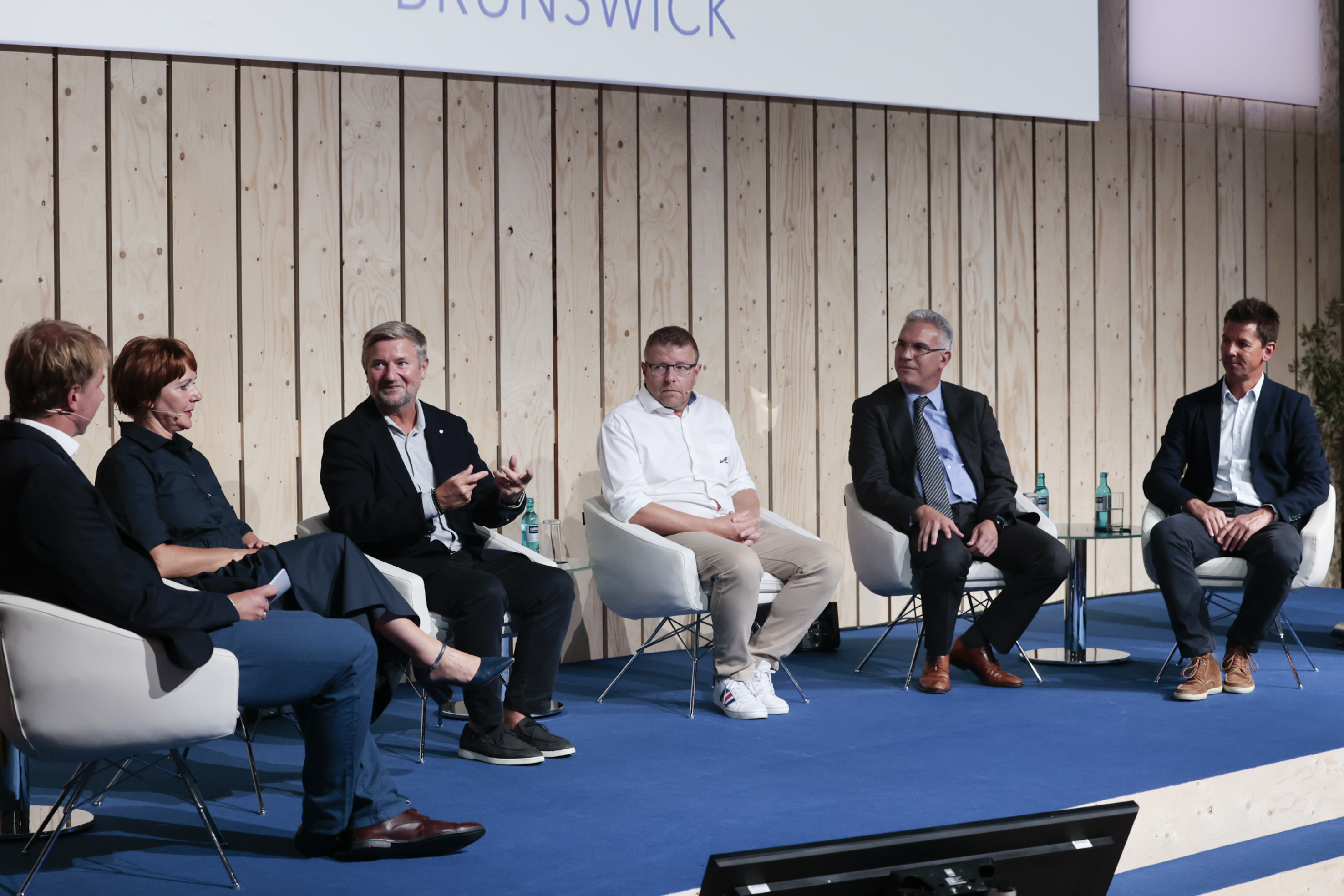
BID’s kick-off event took place on 30 August and was organised by boot Düsseldorf and European Boating Industry. It was opened by Petros Michelidakis (Director, boot Düsseldorf) and Philip Easthill (Secretary-General, EBI).
In the keynote speeches, Dean Smith (COO, D Marin) presented his vision on the future of the marina sector, based on the experience of D Marin, focus on digital solutions to enhance the customer experience and on sustainability with the aim to be good stewards of the marine environment where the marinas are located. Linos Voskarides (Policy Officer - Maritime Policy - Sustainable Blue Economy, European Commission) presented the environmental and climate change-tackling ambition of the European Commission with the European Green Deal.
The panel discussion, moderated by boating journalist Marcus Krall, brought together the key stakeholders of the sector. Besides the two keynote speakers, it included Renata Marević (Manager, Marina Punat), Hans Roelants (General Manager, Searay Netherlands), and Oliver Glück (Vice President Marketing, Torqeedo). They discussed the current strong demand for marina berths, as well as new and used boats, that is forecast to continue in the next years. Regarding sustainability, they also discussed the need to move towards digital solutions to ease and improve the customer experience. To support the industry’s transition, it was agreed that a common roadmap agreed by the sector and policy-makers at EU level would be crucial to advance sustainability and grow jobs and economic opportunities for nautical tourism regions.
The recording of the kick-off meeting can be found here.
During the week going from 6 to 11 September, the southern French city was the meeting point for the nautical industry. As usual, EBI held its first Council meeting of the second half of the year at the show and attended the Festival on the 7 & 8 September.
On the 7 September, the Council meeting took place at the FIN Stand. During the meeting new national representatives were welcomed, including the new president of FIN, Jean Paul Chapeleau and the new Secretary-General of FIN, Olivier Bougan as well one of EBI’s newest members, Karolis Valenta, president of LITBoat, who joined EBI after the last General Assembly held in Brussels on 14 June this year.
Olivier Bourgan replaces Maud Dugourd, who leaves FIN, as Secretary-General of FIN and as Chair of the EBI Executive Committee.
On Thursday 8 September, EBI welcomed MEP Ismail Ertug to the Festival. It was a great occasion to bring the European Parliament closer to the sector.
As guest of EBI, a visit of the show was organised for MEP Ertug that include some representative companies of the sector, as well as a dinner with EBI Council members. It was an ideal opportunity to discuss the industry’s green transition and the needs for supportive policy-making and funding at EU level. Other discussion topics included the EU’s tourism policy and the role of nautical tourism. Further cooperation is planned with MEP Ertutg, who summarised the industry as one of “Europe’s hidden champions”.
The conference, organised in the context of EU-funded projects, focused on the development of small ports and yacht tourism in the Baltic region, issues of improving energy efficiency, cooperation between Baltic Sea ports and other topical issues of the industry. Within the conference, EBI was invited to present its views on the key issues at European level and overarching trends of the industry.
The main challenges and opportunities of the sector were presented by EBI, including the positive underlying consumer trends, lack of marina space and expectation for sustainable propulsion and overall lowered environmental impact from society, governments, and consumers. The various policy demands, and initiatives of EBI were also presented.
Other speakers presented the EU’s perspective towards the development of maritime tourism, technology challenges, creation of a Baltic boating tourism network, energy efficiency solutions, and strengthening regional cooperation in the Baltic. The individual presentations can be found here.
The European Parliament Transport and Tourism Committee held a public hearing on the advancement of on-water recreation and tourism. European Boating Industry was invited, together with some of the most relevant voices of the industry at European level, to participate at the public hearing by the Chair of the Committee, Mrs Karima Delli, to represent the interests of the industry as the European association for the sector. 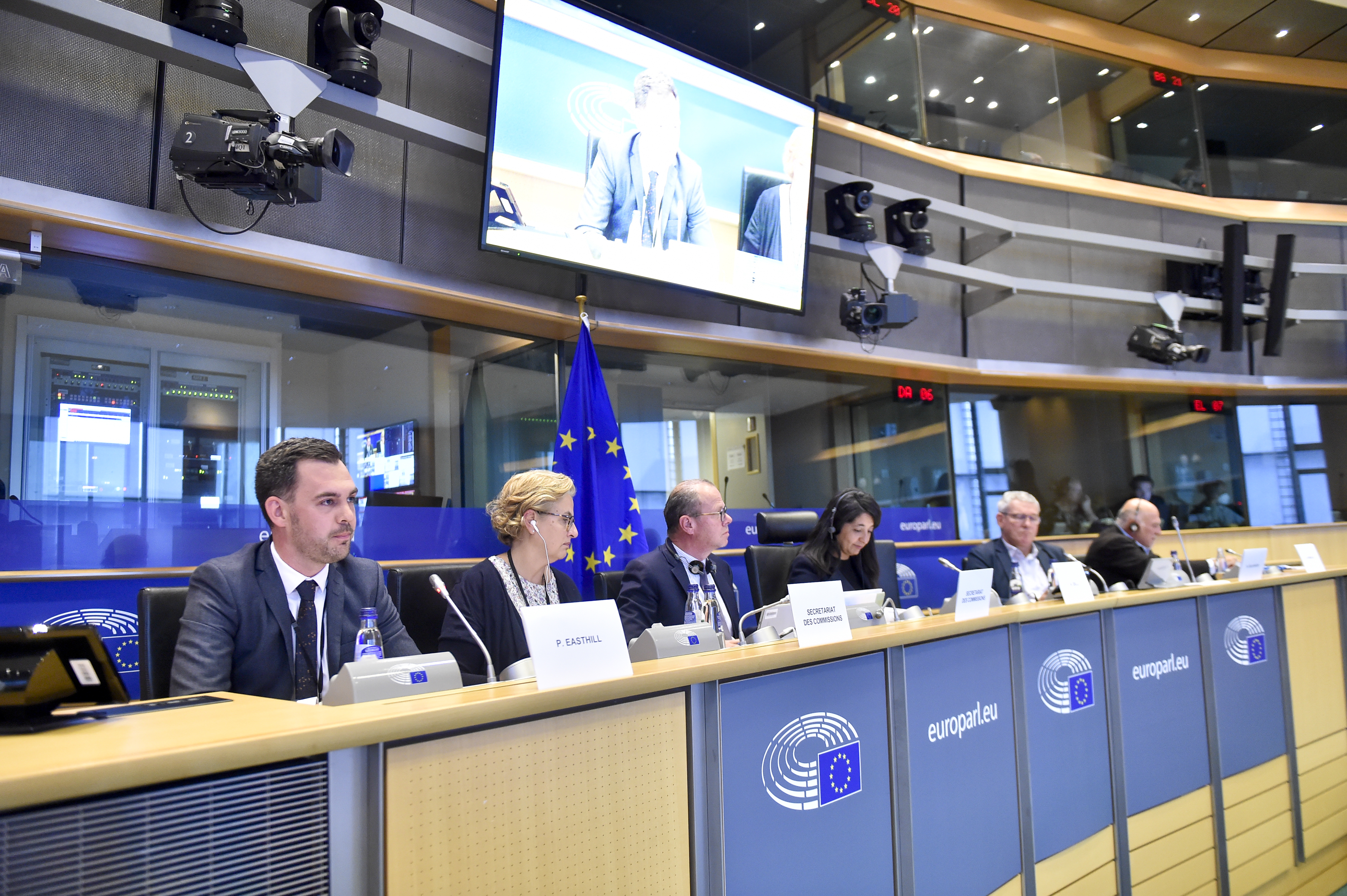
This public hearing was the first time for the recreational boating industry that a hearing was organised focusing solely on the sector , opening a new door at the highest European political level.
Philip Easthill, Secretary General of European Boating Industry, introduced EBI to the Members of the European Parliament and presented the situation of the sector in the European Union. He addressed the main issues that make the recreational boating sector one of Europe's hidden champions, while presenting a number of measures needed to take advantage of this thriving European industry.
Roberto Perocchio, President of Assomarinas, presented the situation of marinas in Europe and their demands, including the need for a common European approach; George Vernicos, Member and Honorary President of the Board of the Hellenic Professional Yacht Owners Association, addressed the future of the charter sector, which looks very promising with the potential to gain even more importance within the European tourism landscape. Nicolas Delaporte, Head of the Tourism division of Voies Navigables de France, presented inland navigation and the type of activities and tourist profiles it brings to destinations, which generates benefits that go beyond the water.
After the experts' interventions, some MEPs took the opportunity to contribute to the conversation. All the interventions were positive in their approach to recreational boating and on-water tourism. MEPs agreed that nautical tourism is beneficial for all countries that are lucky enough to have it.
Sustainability and local communities were also on their minds, being recognised as the two key issues that should be at the heart of any action aimed at nautical tourism, including EU funding. Chair Marina Delli expressed concern about superyachts and the negative impact their emissions generate, as well as the problem of their registration and the working conditions of the crew. She wondered what the EU could do to address this issue. You can watch the recording of the public hearing here.
The Commission presented the new Single Market Emergency Instrument in September. This crisis governance framework aims to preserve the free movement of goods, services and persons and the availability of essential goods and services in the event of future emergencies. This in reaction to the many issues that occurred during the first months of the COVID-19 crisis, which highlighted structural shortcomings in the EU's ability to effectively respond to emergency situations in a coordinated manner. Unilateral measures caused fragmentation, worsening the crisis, and affecting particularly SMEs.
The Single Market Emergency Instrument establishes a crisis management framework to identify different threats to the Single Market and ensure its smooth functioning. It does this by creating a crisis governance architecture to monitor the Single Market, identify different levels of risk and coordinate an appropriate response. It also allows proposing new actions to address threats and when the emergency mode has been activated, free movement in the Single Market will be upheld through a blacklist of prohibited restrictions and, more generally, through reinforced and rapid scrutiny of unilateral restrictions.
Under extraordinary circumstances, and only when the emergency mode has already been activated, the Commission may issue targeted information requests to economic operators, which can be made binding. It may also ask them to accept priority rated orders for crisis-relevant products, in response to which firms must either comply or explain the grave reasons justifying refusal. Furthermore, the accelerated placing on the market of certain products through quicker testing and accreditation, including through conformity assessment, will ensure their availability during emergencies.
The proposals will now be discussed by the European Parliament and Council of the European Union
European Boating Industry was invited to participate at a public hearing within the European Parliament Committee on Transport and Tourism presided over by the Chair of the Committee, Mrs Karima Delli (France, Green Parliamentary Group) and gathered some of the most relevant experts from on-water tourism and recreational boating. EBI was invited as the European association representing the interests of the industry.
The European Parliament Transport and Tourism Committee held a public hearing on the advancement of on-water recreation and tourism. As the representative association of the European sector, EBI spoke at the hearing. The public hearing was a first for the boating industry and opens a new door to the highest European political level.
Philip Easthill, Secretary General of European Boating Industry, introduced EBI to the Members of the European Parliament and informed them about the situation of the sector in the European Union. He addressed the main issues that make the recreational boating sector one of Europe's hidden champions, while presenting a number of measures needed to take advantage of this thriving European industry. He said:
“This meeting and the measures we are proposing offer the opportunity to support a thriving European sector, champion on manufacturing and exports Made in Europe that has been identified by the Commission as an area with potential to foster a smart, sustainable and inclusive Europe. Our sector offers an accessible activity, which we are seeing attracting new generations and sectors of society to enjoy boating for the first time”
During the hearing, Philip Easthill issued three calls to action: Inclusion of nautical tourism and boating recreation in the EU’s Tourism Policy; Supporting transition and comprehensive approach to decarbonisation of the recreational boating industry in review of EU Recreational Craft Directive and additional measures; Recognition of boating and nautical tourism industry as key sectors for European economy and support at EU level to benefit of potential growth.
Roberto Perocchio, President of Assomarinas, presented the situation of marinas in Europe and their demands, including the need for a common European approach; George Vernicos, Member and Honorary President of the Board of the Hellenic Professional Yacht Owners Association, addressed the future of the charter sector, which looks very promising with the potential to gain even more importance within the European tourism landscape. Nicolas Delaporte, Head of the Tourism division of Voies Navigables de France, presented inland navigation and the type of activities and tourist profiles it brings to destinations, which generates benefits that go beyond the water.
The general tone of the following debate with MEPs, was the desire to promote a more sustainable and beneficial tourism for local communities. Experts underlined the reality of the recreational boating sector, an industry in which stakeholders are making real efforts to generate an even more positive effect on the environment and the communities they impact. Furthermore, MEPs raised specific issues, including climate change adaptation, clean propulsion, access of the industry to EU funds, as well as the concerns on the negative perception of super yachts’ impact.
For the recording of the public hearing, please click here and advance until the minute 15:51.
For pictures, presentations, and speeches, please click here
 English
 Български
 Hrvatski
 Čeština
 Dansk
Dansk Nederlands
 Eesti
Eesti Suomi
Suomi Français
 Deutsch
 Ελληνικά
 Magyar
 Gaelige
 Italiano
 Latviešu valoda
 Lietuvių kalba
 Maltese
 Norsk bokmål
 Polski
 Português
 Română
 Русский
 Slovenščina
 Español
 Svenska