

- Home

- Newsroom
- Press releases
- Super User

Super User
The European Commission is gathering information on how the EU applies the "polluter pays" principle in the development of policies with environmental impacts and how Member States implement them.
The results of this fitness check will then be used to draw up the best recommendations for implementation in 2024.
The fitness check is open for public consultation here.
On 5 May, European Boating Industry participated in the European Tourism Day, a significant event that no stakeholder in the European tourism sector could miss. The event brought together key figures in European tourism, including representatives from the European Parliament, European Commission, and various stakeholders. They provided insights into the current state of the industry from their respective perspectives and outlined future steps for the sector. The discussions primarily focused on the green and digital transition, as well as the sector's positive recovery from the impacts of the Covid-19 pandemic.
In the near future, activity can be expected from the European institutions for the tourism sector, especially the implementation of new technologies to make way for data-driven tourism and the integration of sustainability as part of the reality of tourism. The promotion of high quality jobs that are not overly dependent on seasonality and the attraction of young qualified workers are also among the key priorities for the European tourism sector, with skills leading the way in achieving them. In addition, the sector is moving towards practices that are not only more environmentally sustainable, but also more supportive of local populations, seeking to add value both to visitor experiences and to the daily lives of host communities.
The recording of the event is available here.
European Boating Industry was also present at the official European Maritime Day (EMD) in the French city of Brest, where it had the opportunity to participate in various high-level discussions. Political and industry representatives from the European maritime industry came together to address the future of the industry.
The focus this year was on achieving truly sustainable and lasting development of the sector. EBI participated in one of the main workshops addressing the impact of ocean literacy in the sector. Teresa Vereterra, Junior Officer at EBI, presented the main challenges faced by the boating industry, including the lack of qualified workforce as well as the different solutions being implemented by EBI and the industry. The discussion highlighted the close relationship between educational efforts and the industry, exploring new lines of interaction between the education of young people, the knowledge and love of rivers and oceans and the future of a promising sector such as the nautical industry.
During the two-day event, Brest was at the centre of the entire European maritime sector, facilitating communication between stakeholders from all fields, politicians and even curious onlookers, allowing for smooth communication and the transmission of important messages for the future.
All actors are committed to the sustainable development of the sector. Industry, research, production and tourism all expressed the same will to move towards a greener, more sustainable and supportive future, leaving no sector or area behind. Cross-sectoral, inter-authority and inter-geographical cooperation was at the heart of all the initiatives and messages launched during the EMD.
Following on from the EMD, was the launch of the European Blue Forum. It was first mentioned in the European Commission’s Sustainable Blue Economy Strategy in 2021 and will now start its work.
The aim is to create a mechanism for users of the sea to coordinate a dialogue between offshore operators, stakeholders and scientists engaged in fisheries, aquaculture, shipping, tourism, renewable energy and other activities. It will develop synergies between their activities and reconcile competing uses of the sea.
The European Blue Forum has a number of objectives:
- Collaboration among various stakeholders, including governments, private sector, civil society, and local communities.
- Knowledge sharing: The Blue Forum will serve as a platform for sharing information, best practices, and lessons learned among different ocean users.
- Policy coherence: The Blue Forum can contribute to policy coherence and coordination among different sectors and levels of governance. It can help further align European, national, regional and local policies and strategies with international commitments, such as the Sustainable Development Goals and the Paris Agreement.
- Facilitate the interactions between sea users: The Blue Forum aims at fostering a better coexistence of all ocean users. It will provide a space for dialogue to manage competing uses of the sea and its resources.
- Empowerment: The Blue Forum can empower local communities, particularly those who rely on the oceans for their livelihoods, to participate in cross-sectoral dialogue on what affect their lives and well-being.
EBI is a member of the European Blue Forum in order to represent the recreational boating and nautical tourism industry and will actively contribute to the forum. More information can be found here.
As part of the EU’s annual European Maritime Day (EMD), the Ukrainian Maritime Cluster (UMC) hosted the Ukrainian edition of the event. Pre-war it was always hosted in the city of Mykolaiv and took place in a hybrid format in 2023. The theme of this year’s event was: “Strategic Priorities of Economic Recovery” and included discussion of the needs of the maritime industry, its current activities and the launch of new projects to restart the economy and integrate the sector into the European maritime community.
EBI was invited to speak at the event and its Secretary-General Philip Easthill presented EBI’s approach, as well as the boating industry’s activities and priority areas. Regarding the issue of the restoration of maritime industries of Ukraine, he highlighted the main directions for the next years: reconstruction and restoration, recovery of pre-war skills, European integration using recovery funds and regulatory harmonisation, utilisation of Ukraine’s high potential for recreation and tourism in inland and coastal areas, as well as the importance of access to water for all citizens.
Other speakers included, Artem Vashchylenko, UMC Chairman and Olena Zhukova, UMC Executive Director, who both highlighted the importance of international ties for the reconstruction and sustainable development of Ukraine’s maritime economy. It also included Oleksandr Sienkevych, Mykolaiv city mayor, Gregory Tsouris (Green Deal Counsellor, EU Delegation to Ukraine), and René Berkvens, Chairman of the Shipyards and Marine Equipment Association of Europe (SEA Europe).
Further meetings and cooperation between EBI and UMC are planned to support the industry in Ukraine, both in the current war period and after during reconstruction and recovery. The full recording of the event can be found here.
On European Tourism Day, the European Commission launched two competitions to promote smart and sustainable tourism in the EU: the European Capital of Smart Tourism and the European Green Pioneer of Smart Tourism. These initiatives aim to strengthen destinations and recognize cities that have successfully implemented strategies to boost smart and sustainable tourism.
The European Capital of Smart Tourism competition encourages cities to become more sustainable, digital, creative, and accessible. The 2023 report showcases leading examples of smart tourism practices in Europe, providing inspiration for aspiring cities.
To participate, the submission deadline is July 5. Learn more about the application process for the European Capital of Smart Tourism and the European Green Pioneer of Smart Tourism here.
The European Blue Economy Report is the main annual publication produced by the European Commission (DG Maritime Affairs). This report provides a comprehensive analysis of the blue economy, encompassing various economic activities associated with the ocean, seas, and coasts.
The 2023 edition presents a positive view of the sector despite the challenges from the Covid-19 pandemic and the Russian invasion of Ukraine.
Most of the blue economy sectors have grown in the last year, in particular coastal tourism, ship and boat building and offshore renewable energy. This year’s report not only highlights the growth and resilience of the European blue economy but also includes a section dedicated to Climate Change and Coastal Impact, analysing the possible impact climate change can have on coastal zones (here).
The conclusion of the report is that the blue economy has proven its resilience and that it is a critical sector within European economy. Nonetheless continued investments, innovation and collaboration remain crucial for the sustainable growth and development of the sector.
You can read more and access the Blue Economy Report 2023 here.
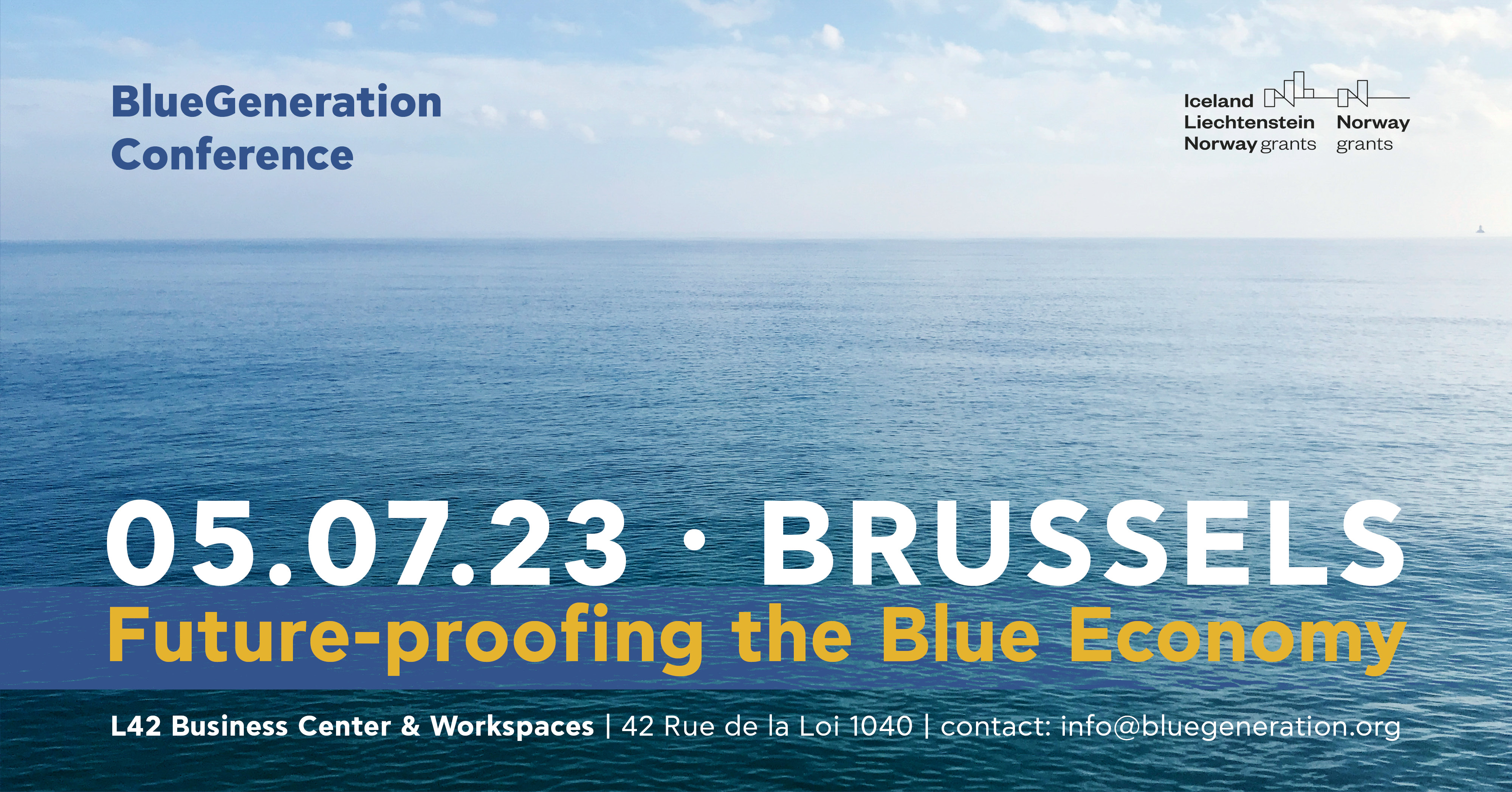
On July 5 join us from 10:00 – 14:00 at the L42 Conference Center in Brussels (Rue de la Loi 42) for the BlueGeneration conference on “Future-proofing the blue economy”.
The Conference will discuss how the Blue Economy can become more attractive to young people and solve its major challenge of renewing its workforce in the coming years. Across the sector, this is a major challenge and requires the support of industry, stakeholders and policy-makers. In several sessions, these issues will be discussed and solutions presented.
You can register now here.
24 – 25 May European Maritime Day (Brest, France)
20 – 21 June General Assembly (Jeanneau - Les Herbiers, France)
20 June, Afternoon 3rd Council meeting (Les Herbiers, France)
21 June, Morning 2nd General Assembly (Les Herbiers, France)
Climate change remains one of the main challenges for the European Union and while the current focus has been on the 2030 targets with corresponding legislation in place, the next step is to define an intermediate target for 2040. The Commission has started the process to establish this 2040 climate target putting the EU firmly on a path towards climate neutrality by 2050. The initiative will be supported by an in-depth impact assessment, which will inform a draft law setting the 2040 target.
In this moment the European Commission has opened a public consultation that will remain open until 23 June 2023 for stakeholders to contribute with their comments to the develop and success of this initiative.
The initiative and public consultation can be found here.
Together with other maritime associations, EBI is a member of the Navigation Task Group of the Water Framework Directive. The Water Framework Directive (WFD) is a European Union directive that aims to establish a framework for the protection and improvement of water quality in Europe. The WFD requires member states to manage their water resources in a sustainable manner and ensure that all bodies of water, including rivers, lakes, and coastal waters, reach good ecological status.
To achieve this, the WFD sets out a series of measures, including the development of river basin management plans, the establishment of monitoring programs, and the implementation of measures to prevent and reduce pollution. The directive also emphasizes the importance of stakeholder involvement, public information, and awareness-raising to promote the sustainable use of water resources. The WFD is relevant for various sectors, including agriculture, industry, and recreation, as it provides a framework for the sustainable management of water resources that benefits both the environment and society. In the context of the recreational boating sector, the WFD emphasizes the importance of preventing pollution from boating activities and ensuring that water quality is maintained at a level that supports healthy aquatic ecosystems.
The WFD Navigation Task Group has published a survey to understand the extent to which those who manage, operate and use inland water bodies for commercial and recreational navigation are (or are not) engaged in discussions about drought management and water allocation.
The questionnaire can be found here and can be submitted back to EBI for submission to the NAVI Task Group by end of May.
 English
 Български
 Hrvatski
 Čeština
 Dansk
Dansk Nederlands
 Eesti
Eesti Suomi
Suomi Français
 Deutsch
 Ελληνικά
 Magyar
 Gaelige
 Italiano
 Latviešu valoda
 Lietuvių kalba
 Maltese
 Norsk bokmål
 Polski
 Português
 Română
 Русский
 Slovenščina
 Español
 Svenska